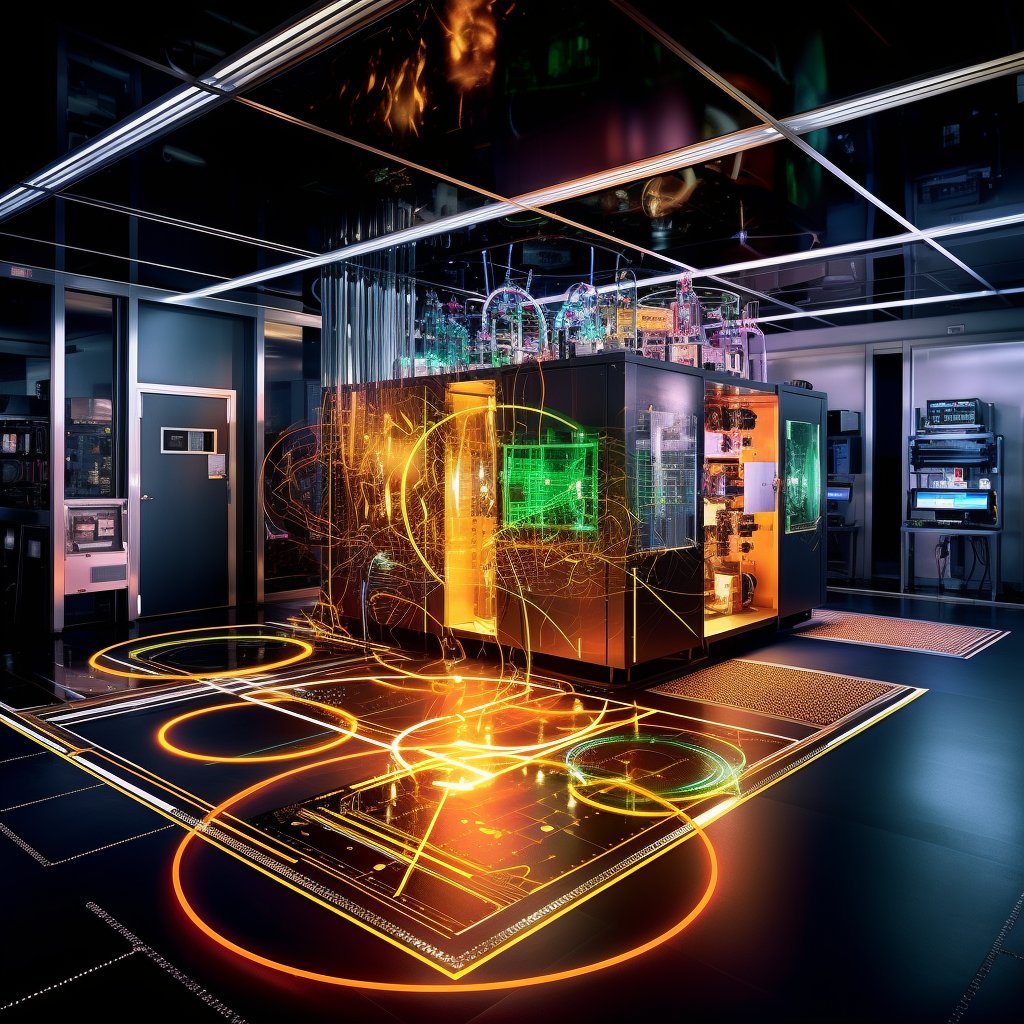
Quantum computing represents a monumental leap from traditional computing, delving into physics’ most arcane aspects to harness unprecedented processing power. At its core, quantum computing diverges from classical computing by leveraging the peculiar principles of quantum mechanics. While classical computers use bits as the smallest data unit, which can be either a 0 or a 1, quantum computers use quantum bits, or qubits. These qubits can exist in a state of superposition, embodying both 0 and 1 simultaneously, which massively increases their computational capacity.
The innovation doesn’t stop at superposition; entanglement is another quantum phenomenon exploited by quantum computers. When qubits become entangled, the state of one instantly affects the state of another, irrespective of the distance separating them. This interconnectivity allows for faster and more complex problem-solving abilities that are simply unattainable with classical computers.
Understanding the operational intricacies of quantum computing requires a fundamental grasp of quantum mechanics, which can be daunting due to its counterintuitive nature. Nevertheless, it’s this very complexity that holds the key to solving problems that are currently intractable. As we stand on the brink of this new computing era, it’s essential to appreciate how these machines operate and the potential they hold for transforming our digital landscape.
Quantum computing and its superpowers
One of the most compelling capabilities of quantum computing is its potential to break through current encryption barriers. With the power of superposition and entanglement, quantum computers can perform calculations at speeds unattainable by classical machines. This has significant implications for cybersecurity; many encryption techniques that safeguard our digital communications could potentially be unraveled by quantum algorithms in seconds.
Another arena where quantum computing is poised to make waves is in drug discovery and development. The ability to simulate molecular interactions at a quantum level could drastically reduce the time and cost associated with developing new medications. As such, pharmaceutical companies are closely watching the evolution of this technology, which promises to accelerate the creation of treatments for diseases that have long eluded effective therapies.
Aside from these applications, quantum computing also has the potential to optimize complex systems like traffic flow, climate modeling, and financial markets. The sheer breadth of problems that could succumb to quantum computation is vast, setting the stage for a revolution across multiple sectors of industry and science.
From science fiction to reality
Recent breakthroughs in quantum technology have propelled what once seemed like science fiction toward tangible reality. Researchers have demonstrated quantum supremacy, where quantum computers have solved problems beyond the reach of even the most powerful classical supercomputers. These achievements herald a new age in computing and are the culmination of decades of research and development in quantum physics and engineering.
Companies and governments are heavily investing in quantum computing, recognizing its strategic importance in achieving technological superiority. The progress made in creating more stable qubits and scalable systems suggests that practical quantum computers may no longer be a distant dream. As researchers continue to surmount technical hurdles, we find ourselves inching closer to integrating quantum computing into everyday technology.
The transition from experimental setups to commercially viable machines is fraught with challenges but also brimming with potential. As we witness breakthroughs unfold, it becomes increasingly important to understand how these advancements will shape the technological landscape and impact society at large.
Preparing for a quantum future
As the prospect of a quantum future becomes more concrete, industries are beginning to prepare for the paradigm shift that quantum computing will bring. Tech giants and startups alike are exploring ways to integrate quantum algorithms into their operations and develop new business models around this technology.
The rise of quantum computing also signals a demand for a new skill set among the workforce. There is an emerging need for professionals who understand both the theoretical underpinnings of quantum mechanics and its practical applications in computing. Educational institutions are responding by offering specialized courses aimed at equipping students with the knowledge to thrive in a quantum-informed industry.
The ramifications of a quantum-powered industry are far-reaching, affecting not only technology companies but also sectors like logistics, finance, healthcare, and energy. As organizations gear up for this transformation, strategic planning and investment in training and research are vital to staying ahead in the race towards a quantum-influenced future.
Navigating the challenges ahead
With great power comes great responsibility, and the advent of quantum computing is no exception. Cybersecurity concerns loom large as existing encryption methods may become obsolete. Addressing these concerns necessitates the development of quantum-resistant encryption algorithms to protect sensitive data against potential quantum attacks.
Moreover, the ethical implications of rapid technological advancement must be considered. Quantum advancements could exacerbate inequalities if access to this cutting-edge technology remains limited to a select few. Ensuring equitable access and implementing robust ethical guidelines will be essential for harnessing quantum technology’s benefits while mitigating its risks.
The journey ahead is complex and filled with unknowns, but also with immense possibilities. As we navigate these challenges, it’s crucial to foster an environment of collaboration among scientists, ethicists, policymakers, and industry leaders. Together, we can steer the course of this revolutionary technology towards a future that reflects our collective values and aspirations.

